
by Premiere Social Media | Aug 25, 2022 | Web Design Services
Good website design is important to make your website visually appealing to your visitors. You should always use creative graphics and images to attract them. A person only has one-tenth of a second to view a website, so great graphics can make all the difference. Be sure to use animation and flash intros sparingly, though. Learn how to make your website appealing.
Usability
Usability is a crucial aspect of any website, as a good user experience can increase your chances of closing the deal. In addition, a well-designed website can separate you from your competitors. It should provide a seamless experience for its visitors. The best website designers understand how to make their sites easy to use and understand, while still making a statement.
Usability is very important for both developers and users. A poorly designed website will result in increased bounce rates, lower conversion rates and fewer sales. Users can become frustrated and leave the site without buying the product. Also, a poorly designed website will not be retained by current users, leading to a negative user experience.
Simplicity
Simplicity in website design is an important aspect of user-friendliness and SEO. Simplicity ensures a fast loading time and allows search engines to index it quickly. It also improves first impressions and enables easy customization. Keeping it simple and clean, makes it easier to customize as needed.
Simplicity is also crucial for ease of navigation. Websites should be easy to use for all visitors and have colors that are pleasing to the eye and fonts that can be easily read. A one-page website with a consistent layout and color scheme is an effective way to brand your company and make your website easy to navigate. A site with multiple pages and a cluttered design will confuse customers and drive them away.
Compatibility
If you want your website to succeed, you must ensure it is compatible with all browsers. This is very important since it can impact your traffic and conversion rates. If a certain browser is not compatible with a particular site, it will affect the way the content displays on the site. Therefore, it is vital for web designers to plan a strategy to make their website compatible with different browsers and mobile friendly.
Browser compatibility is the key to a great user experience. Browser compatibility means that the website design will function properly on all browsers. A great user experience is the most important aspect of any website.
Visual hierarchy
The principle of visual hierarchy is an effective way to guide users through your site. It helps people find information they need and avoid information overload. By creating a hierarchy, you can make sure that the most important elements of your site come first. This way, your users won’t have to search for the key points or get frustrated by trying to find information they need.
Visual hierarchy can be applied to both website pages and images. The easiest way to do this is by using the rule of thirds. In other words, divide your image into thirds, then position important elements along imaginary lines that cut across the image. These imaginary lines should intersect and should be aligned vertically and horizontally.
Grid-based layout
A grid-based layout allows you to easily rearrange the content within the space set aside for it. This technique is particularly useful in header designs with complex backgrounds. It encourages typographic layouts to be easily organized and stylish. However, certain elements can’t be fit inside a grid, so there is a need for flexibility.
A grid can guide you in your decision-making process and facilitate creativity. It can also be a helpful guide when creating responsive designs that work across a variety of devices. By carefully choosing the design elements, you can create a consistent and eye-catching design that can be seen no matter what screen size the user is using.
Testability
The first step in implementing testability is to identify which parts of your site can be tested. Some tests are easier to run if you can switch out objects with the same functionality. This method has numerous benefits, including more efficient debugging and faster delivery. Using external entities can also make it easier to switch out complex functionality for alternative versions. Be sure to test all forms.
Premiere Social Media can create an eye-catching website that is appealing to your potential clients.

by Premiere Social Media | Apr 29, 2021 | Social media Marketing
Hashtags are more than just a social media phenomenon – they are an innovative way to get your posts in front of the right audience and to maximize your organic post reach. You might have seen #hashtags on various social media posts, particularly Twitter, FaceBook & Instagram. But all they are used widely on most platforms. Choosing the right hashtag can connect you to the relevant audience and effectively drive organic traffic to your page, bringing you more clients.
To select the right hashtags, you first need to know what your post is about. Knowing your products or services and how they will benefit the community is important. For example – Assume you’re selling an “Adjustable Wrench” that can be used to tighten or loosen nut bolts. It is a perfect tool for countless mechanical works. Something that most homeowners and DIY professionals wish for in making some common repairs. Thus, optimizing your posts with relevant hashtags like – #diyproject, #DIYtools, #diyideas, #diyhome, #homeimprovement, #interiordesign, #DIYrenovations, #homeimprovementideas – would help you gain a maximum impression, engagement, and organic traffic.
How To Search For Trendy Hashtags?
Undoubtedly, the hashtag is one of the best ways to find relevant social media content. It is best to use hashtags that are already popular. If you choose to create your own hashtag, you will need to market it very well and spread the word. If no one is using a hashtag, it is not worthwhile. You must focus on hashtags that are a bit more vague for the ultimate amount of users. Keep in mind, with the right hashtags, your followers and more so non-followers will find you easily on social media. Here’s how to search for trendy and the most popular hashtags:
- Using a Social Media Platform– Did you know that on many platforms, you can search hashtags to see how many people? On some platforms when you are posting your comment, simply type in the subject of your post and it will have the number of people using it pop up. Some platforms will also give you more suggestions so you can see the numbers of each. If this is not an option, search for different hashtags in the search bar and look to see if there are many entries.
- Using A Hashtag Generator– Tired of guessing what the best hashtag is? A hashtag generator is the easiest way to build traction on all social media platforms, especially Instagram, Facebook and Twitter. Some hashtag generators (like ingramer) embrace the power of AI-based search. They automatically generate relevant hashtags by examining your photo, keyword or link.
- Check out other competitors in your niche– Learn from other businesses & influencer. Observe what hashtags they are using in their posts. You can easily identify appropriate hashtags for your products or services.
- Look at current trending hashtags– Almost every social media platform provides a tool to explore what’s trending. For example – On Instagram, users can use the search engine to browse the top categories. By looking at posts in your desired category, you will see hashtags of interest.
How do I know if Hashtags are working? You can check out the insights & reports on reach, likes, engagement and impressions of your posts or stories. Analytics provides a performance overview of your post and will even help you find out which hashtags are driving the most views.
Things to consider for hashtag publishing……
Think of hashtags as a gateway to connect to a specific topic, idea, movement, theme or conversation. It is just a way of classifying and categorizing your post with a searchable keyword.
You need to follow below-mentioned points carefully in order to boost all social media content:
- Hashtag always starts with # without space. Be careful about punctuation and grammatical mistakes.
- Do not restrict your account. Hashtags works perfectly for a public account.
- Don’t string too many words together. Your hashtags must be relatively short and easy to remember.
- Be relevant to your brand. Many users pick the unrelated hashtag just to gain an impression, but it can destroy your social credibility.
- Instagram and Facebook have an optimal number of hashtags to use on each post. Three for Facebook and 10 for Instagram.
- Be sure to look up your hashtags and see exactly what they refer to. If you are a dentist, #Implants may not be the best option.
- Create a hashtag list that you use regularly and have it handy next to your computer.
- Use hashtags consistently to increase your social media reach, influence purchase decisions and ultimately obtain more customers.
- Promote your business, an idea, notion, concept, belief, or movement with hashtags. It has the power to encourage and bring tremendous change to society.
Hope this article has given you some of the insight you need on HASHTAGS – and how to use them effectively with your social media marketing. If you have found this article useful, do share it with others. If you need extra help. We offer one-on-one social media training and consulting.

by Premiere Social Media | Oct 9, 2020 | Graphic Design
Color plays a big role in how customers recognize, remember, and interact with a business. From a company logo and website to media graphics and digital advertising, color choices help communicate a brands personality and shape first impressions. Understanding color psychology in marketing can help businesses create more effective branding, improve website design, and develop marketing materials that connect with a target audience. Choosing the right colors goes beyond picking personal favorites. Industry, audience, brand identity and marketing goals should all shape color decisions.
What Is Color Psychology in Marketing?
Color psychology explores how different colors influence emotions, perceptions and behavior. In marketing color is used to communicate messages establish brand recognition and guide customers toward actions. For instance a financial company might use blue in its branding to signal stability and professionalism whereas a children’s entertainment company might select yellow, which is a happy color to spark excitement. However color does not produce the same emotional response in every person. Cultural background, personal experience, industry expectation and surrounding design elements can all influence how a person interprets a color. Effective color psychology focuses on choosing color that supports the business identity and appeals to customers.
What Do Different Colors Mean in Branding and Marketing?
Understanding color associations can help you make informed decisions when developing a logo, website, advertisements and other marketing materials.
Red: Energy, Excitement and Urgency
Red is a color commonly associated with passion, excitement, energy and urgency. Red naturally attracts attention making it popular for graphics, sales advertisements and calls to action. It can also be an angry color so it might want to be used sparingly. Businesses may use red to emphasize limited-time promotions or important information. However much red can make a design feel overwhelming.
Blue: Calm, Trust, Reliability and Professionalism
Blue is frequently used in corporate branding because of its associations with dependability, stability and professionalism. Lighter shades can create a approachable appearance while darker blues often communicate sophistication and authority.
Green: Nature, Growth and Balance
Green is commonly associated with nature, health, renewal and growth. Green is frequently used by organizations, wellness businesses, landscaping companies and financial brands. Different shades communicate messages. Bright greens can feel fresh and energetic while deeper greens may create an established sophisticated appearance.
Yellow: Optimism, Happiness and Creativity
Yellow is an attention-grabbing color often associated with uplifting qualities, warmth, positivity and optimism. Businesses may incorporate yellow into their branding to create a cheerful atmosphere. Yellow can also work well as a color in social media graphics and advertising. Because certain yellow shades can be difficult to read against light backgrounds contrast is especially important in website design.
Orange: Enthusiasm, Friendliness and Optimism
Orange combines the energy often associated with red and the warmth of yellow. Orange is frequently used in branding that emphasizes creativity, friendliness, excitement and approachability. Orange can be particularly effective for graphics and marketing campaigns that need to stand out without relying on traditional red.
Purple: Creativity, Luxury and Imagination
Purple is commonly associated with creativity, imagination, elegance and luxury. Beauty brands, wellness companies and creative businesses sometimes use purple to establish an identity. Darker purples may communicate sophistication while lighter shades can create a more relaxed appearance.
Black and White: Simplicity, Elegance and Contrast
Black and white are popular in branding because they create a clean timeless appearance. Black can communicate luxury, authority and sophistication while white often suggests simplicity, openness and clarity. When used together effectively black and white create visual contrast and allow other design elements to stand out.
Why Color Psychology Matters in Digital Marketing
Brand colors influence more than a logo. Brand colors affect how a business appears across websites, social media platforms, advertisements, emails and printed marketing materials. A consistent color palette helps customers recognize a business across channels and in person.
1. Color Helps Build Brand Recognition
Think about brands and how quickly their signature colors come to mind. Consistent use of colors, across a logo, website, social media graphics and advertisements makes a business easier to identify. When customers repeatedly encounter the visual identity those colors can become associated with a company.
2. Color Influences First Impressions
Your website and marketing materials often show customers your business before they talk to you. An inconsistent or poorly coordinated color scheme can make a business look less professional while a designed color palette helps create a cohesive look. Color should match your message, photography, typography and overall brand identity.
3. Color Can Improve Website Navigation and Make it Accessible
Strategic color choices help website visitors spot sections, find important information, and recognize clickable items. For example a contrasting button color can make your contact form or request for a consultation to locate. However the effective button color depends on the surrounding design, readability and audience. No single color guarantees clicks.
4. Color Supports Social Media Marketing
Color consistency is especially important when creating graphics for media. Using the brand colors on Facebook, Instagram, LinkedIn, Pinterest and other platforms helps create a professional unified look. A consistent visual identity also makes your content stand out when customers see your posts in a feed.
How Color Psychology Affects Website Design and Conversions
Choose and Maintain a Consistent Color Palette
You should have a color palette of two or three colors, black, and white. Choosing a color palette needs an understanding of your company, customers and long‑term marketing goals. These should be pleasing to the eyes and all in the same color family. Use all pastels, variations of one color, dark colors, or a mix of both, just make sure they go together well. Using many unrelated colors can confuse visitors. Instead establish a brand color supporting secondary colors and accent colors for buttons or important information. Consistency creates a look and reinforces overall branding.
Understand Your Target Audience
Different audiences may react differently to color combinations. Consider customers’ preferences, backgrounds, needs and expectations. Avoid assuming that everyone in an age group or gender will prefer the same colors. Customer feedback, surveys and market research help you make branding decisions.
Define Your Brand Personality
Before choosing colors think about how you want customers to see your business. Should your company appear professional and established, modern and innovative, friendly and approachable or elegant and luxurious? Color choices should support those characteristics.
Research Your Industry and Competitors
Look at how businesses in your industry use color. Certain industries develop patterns but that does not mean you must copy competitors. Understanding choices can help you decide whether to follow expectations or create a distinctive look.
Make Website Content Easy to Read
Colors are not automatically accessible. Text must have contrast against its background so visitors can read comfortably on computers, tablets and smartphones. Accessibility guidelines generally recommend a minimum contrast ratio of 4.5:1 for text and 3:1 for large text.
Colors for Easier Navigation
A conversion occurs when a visitor completes a desired action, such as sending a contact form requesting an estimate scheduling a consultation or buying a product. Color can support these actions by drawing attention to elements and making a website easier to navigate.
Use Contrasting Colors for Call to Action
Call‑to‑action buttons should stand out from the surrounding content without clashing with the design. For example a dark blue site might use a teal or gold accent for important buttons. The goal is to make the next step obvious to visitors.
Test Colors Instead of Guessing
A/B testing lets businesses compare different versions of a website element to see which performs better. You might test two button colors, different promotional graphics or alternative landing page designs. Measure meaningful results, such as form submissions, purchases and qualified leads than guessing that a particular color will work best.
Create a Professional Brand Style Guide
A brand style guide documents the colors, fonts, logo variations and visual standards used throughout your marketing. Your guide should include color codes, such, as HEX and RGB values to keep consistency across digital platforms. This is especially useful when many people create your media graphics, website content, advertisements and promotional materials.
Common Color Mistakes Businesses Should Avoid
An attractive color palette can become ineffective when used inconsistently.
7 Common Color Branding Mistakes
- Using many competing colors in the same design.
- Choosing colors based only on personal preference.
- Using text and background combinations without contrast.
- Changing brand colors across marketing platforms.
- Choosing call‑to‑action colors that blend into the background.
- Copying another company’s branding of creating a unique identity.
- Ignoring how colors look on devices and various screens.
A strong color palette must be recognizable, accessible and versatile so that it works across marketing channels.
Frequently Asked Questions About Color Psychology in Marketing
What is the best color for marketing?
There is no best color for every business. The effective choice depends on your industry, target audience, brand personality and overall design. Consistency, contrast and usability are often more important than picking a color.
How does color psychology influence branding?
Color psychology helps businesses communicate personality establish recognition and shape customer perceptions. Colors work along with logos, typography, photography and messaging to create a brand identity.
Can changing website colors increase conversions?
Changing colors can improve conversions when it makes important elements easier to notice or interact with. However results vary by website and audience. Businesses should test changes. Measure actual performance.
Why is color consistency important in media marketing?
Consistent colors help customers recognize your content across social media platforms. They also create a professional appearance and reinforce your overall brand identity.
How colors should a business use, in its branding?
Many businesses begin with two or three brand colors, supported by neutral colors and occasional accents. The ideal number depends on the brand’s identity and how the colors will be used.
Build a Stronger Brand With Professional Graphic Design
Color psychology is one part of digital marketing. The right mix of colors, typography, imagery and messaging helps create a brand and a positive customer experience. Whether you are developing a logo refreshing your website or improving your social media graphics thoughtful design choices can help your business communicate more effectively.
Premiere Social Media, based in Mesa, Arizona offers graphic design, logo design, branding, website design and digital marketing services for businesses locally and nationwide. Ready to improve your business’s branding? Contact Premiere Social Media to discuss your design and digital marketing needs.
Article Updated on 10/21/26
by Premiere Social Media | Sep 12, 2020 | Graphic Design
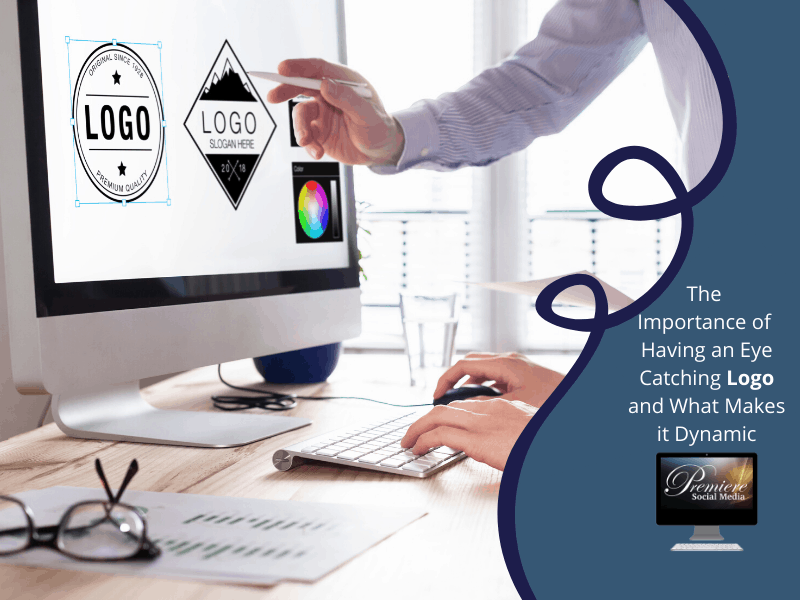
The Importance of Having an Eye Catching Logo and What Makes it Dynamic
Having a dynamic logo is a must for all businesses. Logos should be recognizable in order to immediately identify the business. Here are some benefits of having an eye catching logo and what makes a logo dynamic.
Details of your company
A dynamic logo should tell a story. There should be no confusion as to what the logo represents. It should be strategic and purposeful. There should be specific predetermined goals set before creating the logo. These goals should be based on research of your specific business, as well as the desired result and statement that you want it to make. Research your target audience and figure out what will be pleasing to their eyes.
Be Unique
Think outside the box and be creative. Use dynamic colors. Make sure the logo is not too busy and is somewhat simple. The font must be easily readable without being boring. Companies want to build familiarity from consumers. When a logo is found in different environments consumers will be able to easily identify the business even if they are in a different area.
Find a Design That You Will Love For Years to Come
Your logo will brand your company. Choose colors that you can use in all your branding material and online marketing. Logos are not something that change over time. Figure out a shape and design that is pleasing to the eyes and attracts customers.
How to Make a Dynamic Logo
The easiest way to create a dynamic logo is to find a designer with extensive experience in logo and graphic design. Make sure the designer is well acquainted with your business before coming up with an idea. The design needs to truly represent the company, it should tell a story. Be sure to know your target market and make sure it would appeal to them. Develop a relevant logo that reflects the interests of your company.
If you are looking for a logo designer, Premiere Social Media is here to help. See some of our work here. Call us at 480-525-6275 to hear more about what we can do for you.

by Premiere Social Media | Aug 19, 2020 | Social media Marketing
Q1. What kind of content should I post?
You can turn to social media to see what your competitors are posting online. This is always the first step. Do not copy them but get inspiration. It is very helpful to create a social media calendar and get on a schedule to save time and efforts. Canva is a great way to design eye catching graphics.
Be creative, entertain and inspire your audience. Become the expert in your field. At Premiere Social Media, we have a team of content writers who create the best content for your business.
Q2. What social media platforms can I use for my business?
It is essential to have your business listed on all forms of social media. The top platforms are Google My Business, Facebook, Instagram, Pinterest, LinkedIn, Twitter and YouTube. Claim and create all platforms. Choose the top one to focus the most on. Choose the next top two to post on regularly but not spend as much time on, once it is up and going. The ones that you do not use often, use them to direct people to the main ones.
You must figure out where your audience is before you start. There is no point in pitching, talking, and communicating to the wrong audiences. Keep in mind whether your focus is B2B or B2C. Age and demographics play a big part in choosing which platforms you will be most active in. Facebook is always the number one place to start for every business.
Q3. Should I create different posts for each platform?
Yes, each social media platforms is very different. On Facebook we add value and offer expertise, while on Instagram we post compelling photos. LinkedIn was specifically created for business owners. They all have their reasons why people favor one over the other.
We offer social media training to teach you about each platform in depth.
Q4. Why should I use social media?
Social media mixed with networking is the best form of marketing at this time. The world is increasingly going social. Studies show that 30% of all the time spent online is spent on social media platforms. Social media is where people are and you are expected to be there as a business owner.
Without having a social media presence, your brand will struggle to gain visibility. You need to move with the times and get on social media today.
Q5. How often should I post?
Each platform is very different. Facebook should be posted on no more than once per day. On platforms like Twitter and Instagram, you can post frequently, even as much as 4 to 5 times per day.
You can also use Facebook, Instagram, and Snapchat stories. They only last 24 hours, but they are incredibly effective when it comes to getting seen.
Q6. Do I need social media for my business?
You need social media marketing for your business. Every business needs it. You are expected to be there.
People leave reviews and feedback on your products, ask questions and even order on your page. Your potential customers will google your products and company to choose if they want to become a client.
About 85% of people look up businesses online before transacting with them. Traditional advertising is slowly dying. It is social media marketing that can help in creating trust in your products and services.
Q7. Can we measure ROI with social media?
Although it is not very straightforward to measure ROI with social media, there are a few things that you can directly measure and track. When running paid ads, you will get the results of your ads directly from that platform. These results can be somewhat misleading as one may get a sale in the future from that person that saw the ad, rather than when it ran. Ad results only report certain items, depending on what type of campaign you are running. Remember that likes, messages, comments, shares, website views, referrals, emails, calls and of course new, future and current clients are all things that will come from your marketing efforts on social media. It is very hard to track all of these when running one ad.
Q8. Will social media help me grow my business?
If social media marketing is done properly, it will be very beneficial to your business. With social media, you will build credibility, strengthen your brand, get your business in front of the right audience, while getting new payed clients and staying in front of your current clients.
Start marketing with social media today. If you are unsure of how to effectively market, we offer training, consulting and management.
Q9. What are the benefits of social media marketing for my business in Arizona?
Social media is a must to all businesses worldwide. The way businesses interact and communicate with customers has changed forever. Social media builds credibility and gets your message in front of new clients and keeps you in front of clients that you already have. You develop deep relationships with your customers when you connect on social media. It helps your customers stay informed and helps you increase your reach and revenue.
If you are not currently on social media, now is the time to start. Do it for you and your business. Dominate your competition today.
Contact us now to schedule a FREE phone consultation. We help clients worldwide.

Recent Comments